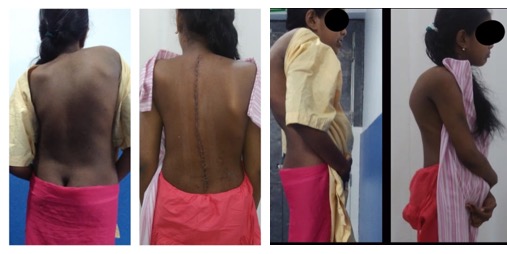
What is Scoliosis Correction Surgery?
Scoliosis is a condition characterized by an abnormal curvature of the spine, often diagnosed during childhood or adolescence. If untreated, severe cases can lead to discomfort, respiratory issues, and impaired posture.
Timely scoliosis surgery in children or adults can provide significant relief and correction
Dr. Vignesh Pushparaj is a one of the Best Scoliosis Surgery Doctor in Chennai, Tamil Nadu. Provides quality cost effective treatment for Scoliosis Correction Surgery with Advanced Technology & 100% Safe Treatment.
Symptoms of Scoliosis
The symptoms of scoliosis vary depending on the severity of the spinal curve. Mild cases may show minimal symptoms, while severe cases can cause noticeable physical changes and discomfort.
Common symptoms include:
Uneven shoulders
One shoulder blade appearing more prominent
Uneven waist or hips
Leaning to one side while standing
Visible curvature of the spine
Back pain or muscle fatigue
Difficulty standing straight for long periods
In advanced scoliosis, the rib cage may protrude on one side due to spinal rotation.
Parents should also look for signs such as uneven clothing fit or posture changes in children and adolescents.
Figure 1
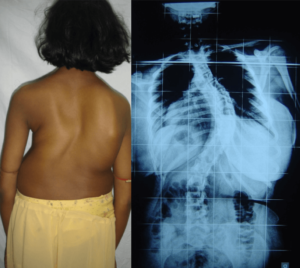
Normally spine is straight when you see front to back and body is erect when seen from side to side. Abnormal curvature of the spine is spine deformity. Side-to-side abnormal spinal curve is Scoliosis. (See Figure-1)
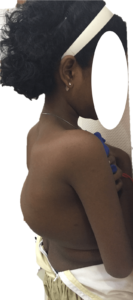
Spine of a person with scoliosis looks more like an “S” or a “C” than a straight line. Forward bending of the spine which produces a round back deformity is Kyphosis. (See Figure-2)
Scoliosis is of 4 types, in that adolescent idiopathic scoliosis accounts for 80 percent of cases, with prevalence of 0.47–5.2 % in general population. The female to male ratio ranges from 1.5:1 to 3:1 which indicates that the female children are affected more. Scoliosis progression is accelerated during the time of menarche.
Figure 2
To know in-depth about best scoliosis surgery & surgeon in Chennai, contact us today.
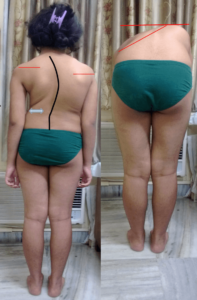
How to identify scoliosis in kids ? (See Figure-3)
Figure 3
1.Crooked shoulders—one is higher than the other.
2.Head does not seem center, it is slightly tilted to one side when they are observed from back or front.
3.One of their hips is higher than the other.
4.When they stand relaxed arm to trunk gap is higher on one side comparing to the other.
5.Their rib cage seems uneven or crooked—one side higher than the other or they have a “rib hump” on one side of their back when they lean over.
Causes of Scoliosis
Scoliosis can develop due to various reasons. In many cases, the exact cause is unknown.
Common causes include:
Idiopathic Scoliosis
This is the most common type and typically develops during adolescence. The exact cause is unknown but it may have a genetic component.
Congenital Scoliosis
This occurs when the spine develops abnormally before birth due to malformed vertebrae.
Neuromuscular Scoliosis
This type is associated with neurological conditions such as:
Cerebral palsy
Muscular dystrophy
Spinal cord disorders
Degenerative Scoliosis
Degenerative scoliosis occurs in adults due to aging, spinal degeneration, arthritis, or disc problems.
Injury or Trauma
Spinal injuries, infections, or tumors can also lead to spinal deformity.
Benefits of Scoliosis Correction Surgery
Scoliosis surgery offers several benefits for patients with severe spinal curvature.
Benefits include:
-
Improved spinal alignment
-
Reduced back pain
-
Prevention of curve progression
-
Better posture and balance
-
Improved breathing function in severe cases
-
Enhanced quality of life
Most patients experience significant improvement in both physical appearance and functional ability.
Scoliosis Surgery Treatment Hospital in Chennai
If scoliosis curve is greater than 45-50°, it will very likely get worse with increase in age of the patient. This will result in increased deformity in your back, it will affect our lung function. Surgery is recommended. For scoliosis surgery in Chennai and related details such as procedure, success, and fees, consult Dr. Vignesh Pushparaj. He is one of the trusted and leading scoliosis surgeons in Chennai.How successful is scoliosis correction surgery?
Spinal fusion is very successful in stopping the curve from growing. We could also straighten the scoliosis spine significantly, which will improve the patient’s appearance as well as lung function.Advanced Techniques Used in Scoliosis Surgery
Modern spine surgery techniques have significantly improved the safety and outcomes of scoliosis correction procedures.
Advanced techniques may include:
Pedicle Screw Fixation
Provides strong spinal stabilization during correction.
Neuromonitoring
Monitors spinal cord function during surgery to reduce the risk of nerve injury.
Minimally Invasive Spine Surgery
In selected cases, minimally invasive techniques reduce tissue damage and speed recovery.
3D Imaging and Navigation
Advanced imaging helps surgeons achieve precise spinal alignment.
These techniques improve surgical accuracy and patient outcomes.
Risks and Complications of Scoliosis Surgery
Like any major surgical procedure, scoliosis surgery carries certain risks. However, advances in surgical techniques have significantly reduced complications.
Potential risks include:
-
Infection
-
Blood loss
-
Nerve injury
-
Implant complications
-
Delayed bone fusion
Careful surgical planning and experienced spine surgeons help minimize these risks.
Will fusion make patients back stiff and unable to move?
There will be enough movements with the help of hip joints, there will be minimal restriction of about 5-10 degree. Most people have enough motion in the unused portion of their lower backs to perform all activities of daily living and most sports. It may take a while to adapt. Most people find that, within a year or so, their backs begin to feel.